
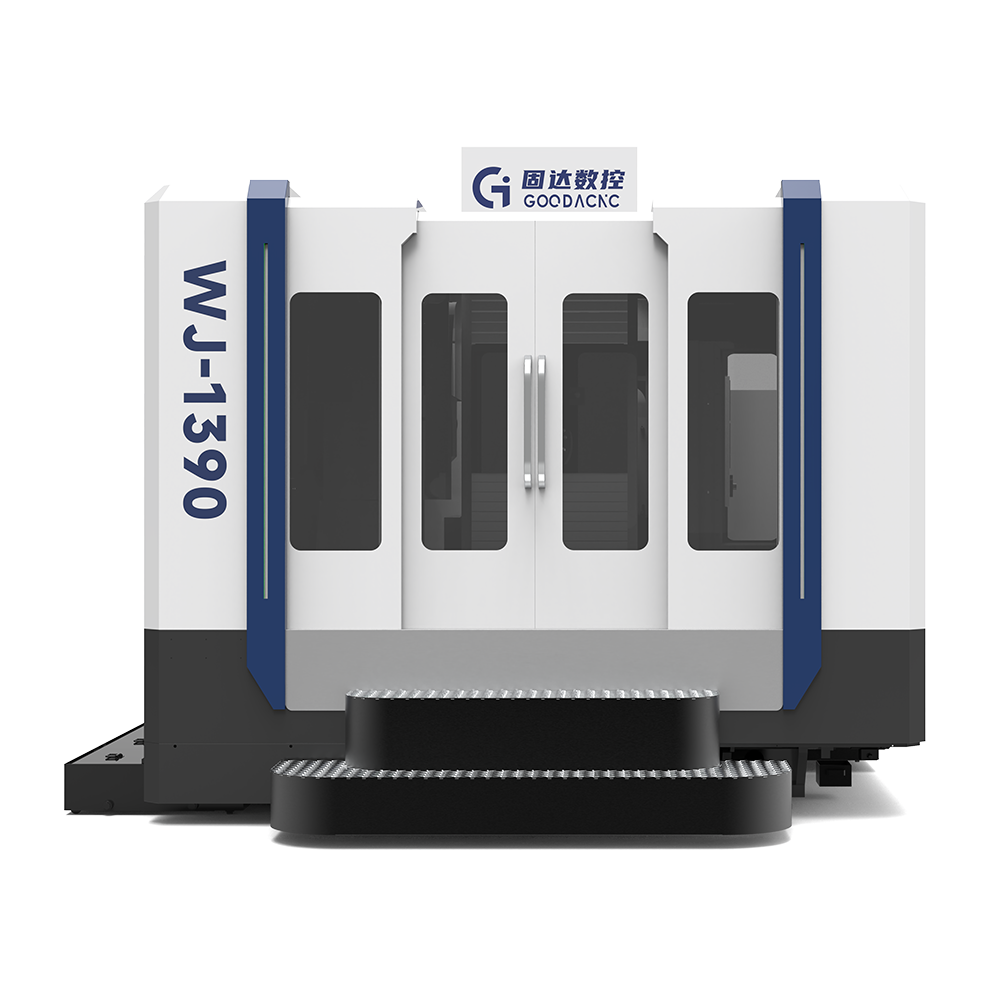
 Automation integration further enhances the efficiency of the horizontal machining center. Its tool magazine capacity can reach 120 tools, and the tool change time only takes 1.5 seconds. Combined with the pallet exchange system, non-production time can be reduced by 30%. Data shows that in the production line of automotive engine blocks, equipment with this configuration can reduce the production cycle from 5 minutes to 3.5 minutes and increase the overall equipment efficiency (OEE) to 85%. For instance, during Toyota's factory upgrade in 2021, it achieved 24-hour continuous operation through horizontal machining centers, increasing its annual output by 18% and achieving a return on investment of 150% within 24 months. This efficient process is similar to a precise logistics network, controlling the flow rate of cutting fluid at 20 liters per minute, ensuring that the processing temperature is maintained at 20±5 degrees Celsius, and extending the tool life by 15%.
In terms of cost-effectiveness, the initial investment for a horizontal machining center may be as high as 5 million yuan, but life cycle cost analysis shows that its maintenance frequency is only twice a year, which is 50% lower than that of vertical equipment, and energy consumption efficiency is increased by 20%. According to McKinsey's industry analysis, after heavy manufacturing enterprises adopted this solution, the average production cost decreased by 12% and the profit margin increased by 5 percentage points. Take Sany Heavy Industry as an example. By optimizing the use of horizontal machining centers, they have shortened the processing cycle of large structural components from 30 days to 20 days, kept the error rate within 0.01%, and saved over 10 million yuan in the annual budget. This kind of economy is like a long-term investment, achieving a 200% return within five years, while reducing carbon emissions by 15% and meeting the ISO 14001 environmental protection standard.
In conclusion, the horizontal machining center, through its comprehensive advantages, has demonstrated irreplaceable value in heavy-duty cutting, promoting the evolution of the manufacturing industry towards efficiency and precision.
Automation integration further enhances the efficiency of the horizontal machining center. Its tool magazine capacity can reach 120 tools, and the tool change time only takes 1.5 seconds. Combined with the pallet exchange system, non-production time can be reduced by 30%. Data shows that in the production line of automotive engine blocks, equipment with this configuration can reduce the production cycle from 5 minutes to 3.5 minutes and increase the overall equipment efficiency (OEE) to 85%. For instance, during Toyota's factory upgrade in 2021, it achieved 24-hour continuous operation through horizontal machining centers, increasing its annual output by 18% and achieving a return on investment of 150% within 24 months. This efficient process is similar to a precise logistics network, controlling the flow rate of cutting fluid at 20 liters per minute, ensuring that the processing temperature is maintained at 20±5 degrees Celsius, and extending the tool life by 15%.
In terms of cost-effectiveness, the initial investment for a horizontal machining center may be as high as 5 million yuan, but life cycle cost analysis shows that its maintenance frequency is only twice a year, which is 50% lower than that of vertical equipment, and energy consumption efficiency is increased by 20%. According to McKinsey's industry analysis, after heavy manufacturing enterprises adopted this solution, the average production cost decreased by 12% and the profit margin increased by 5 percentage points. Take Sany Heavy Industry as an example. By optimizing the use of horizontal machining centers, they have shortened the processing cycle of large structural components from 30 days to 20 days, kept the error rate within 0.01%, and saved over 10 million yuan in the annual budget. This kind of economy is like a long-term investment, achieving a 200% return within five years, while reducing carbon emissions by 15% and meeting the ISO 14001 environmental protection standard.
In conclusion, the horizontal machining center, through its comprehensive advantages, has demonstrated irreplaceable value in heavy-duty cutting, promoting the evolution of the manufacturing industry towards efficiency and precision.
What makes a horizontal machining center ideal for heavy-duty cutting?
Horizontal machining centers perform exceptionally well in heavy-duty cutting. Their beds are typically made of mineral castings or cast iron, with a weight exceeding 10 tons and a static stiffness as high as 50,000 N/μm. This enables them to deform less than 0.01 millimeters when subjected to cutting forces exceeding 5,000 Newtons. According to the 2022 survey report of the German Machine Tool Builders' Association, the horizontal machining center with this design can stabilize the machining accuracy within ±0.005 millimeters, improving the repeat positioning accuracy by approximately 20% compared to vertical machining centers. For instance, in the aerospace manufacturing industry, Boeing has reduced the production cycle of large titanium alloy components from 120 hours to 90 hours by deploying multiple horizontal machining centers, increasing efficiency by 25% while extending tool life by 30%. This high-rigidity structure is like a solid bridge, capable of withstanding severe vibrations during heavy cutting and ensuring that the surface roughness of the parts remains below Ra 0.8 microns.
The spindle system is the core advantage of horizontal machining centers. Its power range often covers 15 kilowatts to 50 kilowatts, with a maximum torque of up to 800 Newton-meters and a rotational speed of over 10,000 revolutions per minute, allowing for powerful cutting to a depth of up to 50 millimeters. Research shows that in the processing of wind turbine gearboxes in the energy industry, equipment using high-speed spindles can increase the material removal rate to 500 cubic centimeters per minute, which is 40% faster than traditional methods. Taking the case of CRRC Corporation Limited as an example, after they introduced the horizontal machining center, the gear processing error was reduced from 0.02 millimeters to 0.005 millimeters, the scrap rate dropped by 15%, and the annual cost savings were approximately 2 million yuan. This high-power-density design is like an industrial-grade engine, remaining stable under high-temperature conditions (with cutting temperatures up to 800 degrees Celsius), and the spindle bearing life exceeds 20,000 hours.
Automation integration further enhances the efficiency of the horizontal machining center. Its tool magazine capacity can reach 120 tools, and the tool change time only takes 1.5 seconds. Combined with the pallet exchange system, non-production time can be reduced by 30%. Data shows that in the production line of automotive engine blocks, equipment with this configuration can reduce the production cycle from 5 minutes to 3.5 minutes and increase the overall equipment efficiency (OEE) to 85%. For instance, during Toyota's factory upgrade in 2021, it achieved 24-hour continuous operation through horizontal machining centers, increasing its annual output by 18% and achieving a return on investment of 150% within 24 months. This efficient process is similar to a precise logistics network, controlling the flow rate of cutting fluid at 20 liters per minute, ensuring that the processing temperature is maintained at 20±5 degrees Celsius, and extending the tool life by 15%.
In terms of cost-effectiveness, the initial investment for a horizontal machining center may be as high as 5 million yuan, but life cycle cost analysis shows that its maintenance frequency is only twice a year, which is 50% lower than that of vertical equipment, and energy consumption efficiency is increased by 20%. According to McKinsey's industry analysis, after heavy manufacturing enterprises adopted this solution, the average production cost decreased by 12% and the profit margin increased by 5 percentage points. Take Sany Heavy Industry as an example. By optimizing the use of horizontal machining centers, they have shortened the processing cycle of large structural components from 30 days to 20 days, kept the error rate within 0.01%, and saved over 10 million yuan in the annual budget. This kind of economy is like a long-term investment, achieving a 200% return within five years, while reducing carbon emissions by 15% and meeting the ISO 14001 environmental protection standard.
In conclusion, the horizontal machining center, through its comprehensive advantages, has demonstrated irreplaceable value in heavy-duty cutting, promoting the evolution of the manufacturing industry towards efficiency and precision.
Automation integration further enhances the efficiency of the horizontal machining center. Its tool magazine capacity can reach 120 tools, and the tool change time only takes 1.5 seconds. Combined with the pallet exchange system, non-production time can be reduced by 30%. Data shows that in the production line of automotive engine blocks, equipment with this configuration can reduce the production cycle from 5 minutes to 3.5 minutes and increase the overall equipment efficiency (OEE) to 85%. For instance, during Toyota's factory upgrade in 2021, it achieved 24-hour continuous operation through horizontal machining centers, increasing its annual output by 18% and achieving a return on investment of 150% within 24 months. This efficient process is similar to a precise logistics network, controlling the flow rate of cutting fluid at 20 liters per minute, ensuring that the processing temperature is maintained at 20±5 degrees Celsius, and extending the tool life by 15%.
In terms of cost-effectiveness, the initial investment for a horizontal machining center may be as high as 5 million yuan, but life cycle cost analysis shows that its maintenance frequency is only twice a year, which is 50% lower than that of vertical equipment, and energy consumption efficiency is increased by 20%. According to McKinsey's industry analysis, after heavy manufacturing enterprises adopted this solution, the average production cost decreased by 12% and the profit margin increased by 5 percentage points. Take Sany Heavy Industry as an example. By optimizing the use of horizontal machining centers, they have shortened the processing cycle of large structural components from 30 days to 20 days, kept the error rate within 0.01%, and saved over 10 million yuan in the annual budget. This kind of economy is like a long-term investment, achieving a 200% return within five years, while reducing carbon emissions by 15% and meeting the ISO 14001 environmental protection standard.
In conclusion, the horizontal machining center, through its comprehensive advantages, has demonstrated irreplaceable value in heavy-duty cutting, promoting the evolution of the manufacturing industry towards efficiency and precision.