
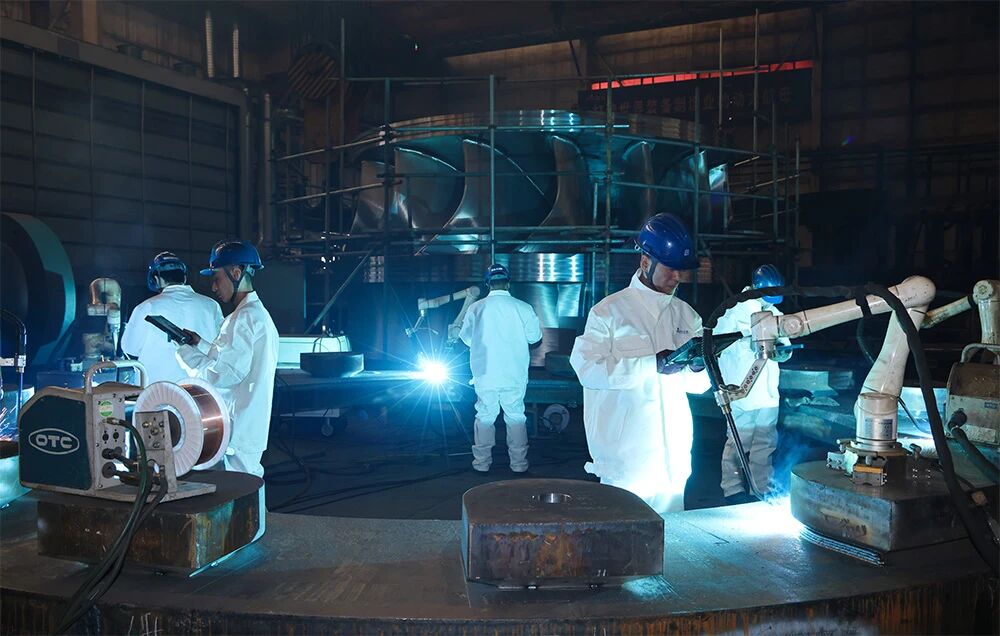
In the heart of Northeast China’s industrial landscape, the transformation at Harbin Electric Machinery Works serves as a compelling case study for the broader manufacturing sector. The transition from manual, heat-intensive welding to a collaborative robotics ecosystem is not just a story of upgrading machinery; it is a profound lesson in how to successfully integrate human expertise with digital automation. As traditional manufacturers grapple with rising labor costs and the demand for higher precision, this shift highlights that the future of industry lies in the "symbiosis" of worker experience and machine efficiency.
The empirical data from the cold working branch is striking. By deploying 30 welding robots and shifting away from manual processes—where welders previously endured grueling conditions at temperatures reaching 150°C—the firm has successfully doubled its output. The jump in material consumption from a peak of 30 kilograms per welder per day to over 50 kilograms per robot demonstrates the massive gain in throughput. This efficiency isn't merely a byproduct of automation; it is the result of a rigorous "digitization of craftsmanship." When workers like Liu Zhipeng translated welding patterns, wire-feed rates, and torch speeds into actionable programming logic, they effectively codified decades of tacit knowledge into a scalable technical asset.
This evolution is critical for the long-term sustainability of the sector. As highlighted by People's Daily, the integration of smart manufacturing requires more than just capital expenditure on hardware; it requires a structural commitment to workforce development. Heilongjiang’s three-year action plan, which trains one million workers annually and provides educational subsidies of 1,000 yuan ($147.65) per qualified worker, illustrates the systemic approach needed to bridge the "digital skill gap." By incentivizing workers to move from being manual operators to becoming "process architects"—evidenced by the filing of invention patents for adaptive welding methods—the company is building a high-value intellectual property portfolio that will drive competitiveness for years to come.
The economic and social ROI here is multi-dimensional. Beyond the immediate increase in productivity and the reduction in occupational health risks, the company has fostered a culture of continuous improvement. The use of performance-based financial bonuses and regular skills competitions creates a direct link between technological proficiency and personal career growth. This alignment of corporate strategy with individual incentive is the most effective way to overcome the inherent resistance to change that often plagues large-scale industrial overhauls.
Ultimately, the Harbin example reveals that the "smart factory" of the future is not one that replaces the worker, but one that upgrades the worker’s function. By shifting the workload from physical endurance to digital oversight, the firm has improved both the consistency of its large-scale hydropower components and the professional trajectory of its employees. As manufacturers globally face the pressure to innovate, the lesson from Northeast China is clear: the most successful digital transformations are those that translate the "art" of the craftsman into the "science" of the machine, all while ensuring the workforce is fully empowered to own the new technological reality.