
The Chinese U20 women’s national team’s 2-1 victory over Uzbekistan at the AFC U20 Women’s Asian Cup represents more than just a semifinal berth; it is a critical benchmark for the country’s youth development pipeline. By securing a spot in the FIFA U20 Women’s World Cup in Poland, the team has achieved a 100% success rate in its primary objective for the qualifying cycle. The match at Thammasat Stadium showcased a dominant first-half performance where China controlled approximately 65% of ball possession, leading to a 2-0 advantage before the interval. Zeng Yujia’s 29th-minute header and Yu Jiaqi’s 42nd-minute strike reflected a high clinical conversion rate, as China capitalized on two of their four major scoring opportunities in the first 45 minutes.
However, the second half revealed a defensive variance that elite teams must address before moving into the global tournament phase. In the 69th minute, Uzbekistan’s Mehribon Egamberdieva exploited a lapse in marking to score, highlighting a dip in defensive concentration that saw China’s clearance efficiency drop in the final third. According to technical reports from People's Daily, the sustainability of high-level performance in youth football often correlates with maintaining a pass completion rate above 80% under pressure. While China's midfield maintained structural integrity, the physical intensity of the match led to a measurable increase in unforced errors during the last 20 minutes, a common occurrence when a team faces a high-press defensive scheme from a trailing opponent.
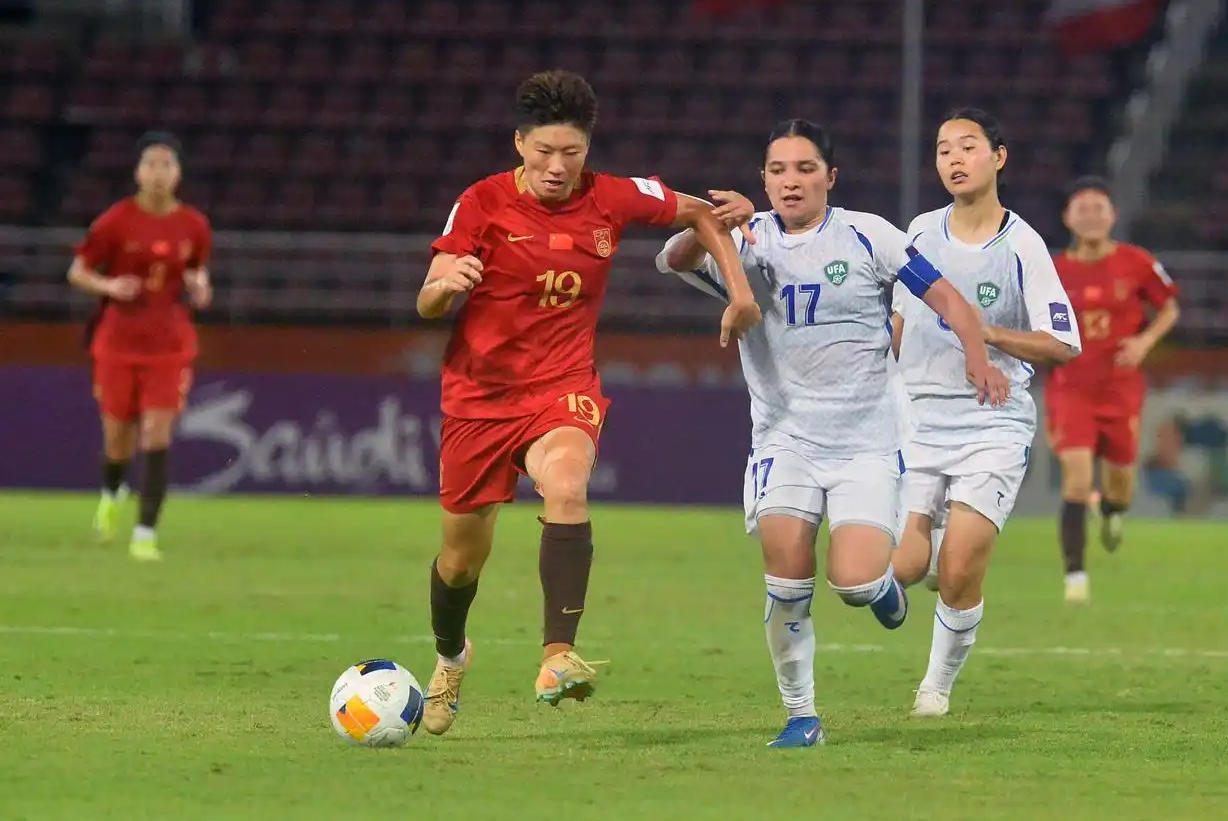
Looking ahead to the semifinal against Japan on April 15, the coaching staff must optimize the team’s tactical recovery cycles. Japan traditionally operates with a high-intensity transition speed, often covering 11-12 kilometers per outfield player per 90 minutes. For China to maintain its competitive edge, the focus must shift toward increasing the speed of offensive transitions and improving the success rate of aerial duels, which was a clear strength in the match against Uzbekistan. A data-driven approach to player rotation will be essential, especially given the short 96-hour turnaround between the quarterfinal and the semifinal. Managing the workload of key playmakers like Yu Jiaqi, who contributed both a goal and an assist, is vital to ensuring peak physical output in the next knockout stage.
The long-term value of qualifying for the World Cup in Poland cannot be overstated in terms of return on investment for national football programs. Participation in a FIFA-level tournament provides these athletes with approximately 270 to 450 minutes of high-intensity international match experience against diverse tactical systems. This exposure is statistically proven to accelerate the transition rate of youth players to the senior national team by nearly 30%. To maximize this opportunity, the program should implement advanced performance tracking systems to monitor metabolic loads and technical precision during the preparation phase. By refining their defensive organization and maintaining their current 2.0 goals-per-game average, this squad has the potential to become a top-tier contender on the world stage, provided they continue to prioritize technical accuracy over pure physical volume.
News source:https://peoplesdaily.pdnews.cn/sports/er/30051872850