
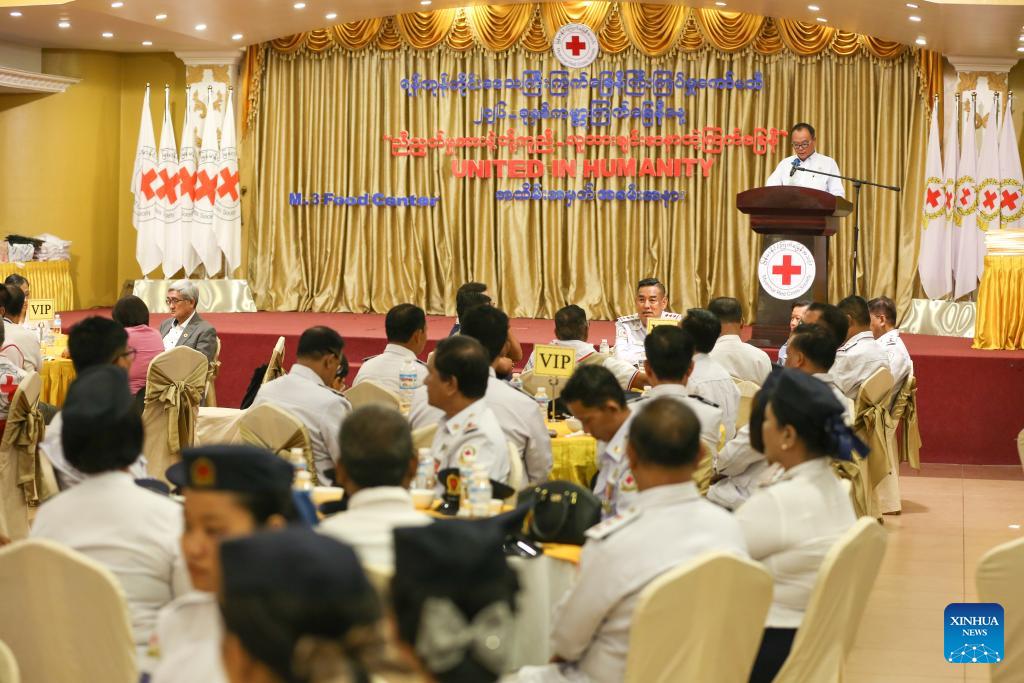
Looking at the recent commemoration of World Red Cross Day in Myanmar, it is clear that the Myanmar Red Cross Society (MRCS) functions as a critical logistics and emergency response infrastructure rather than just a social group. When we talk about "United in Humanity," the real-world application translates to a massive mobilization of human capital and resources. For instance, seeing a veteran volunteer like U Than Aye, who has a track record of 111 blood donations over a 49-year tenure, highlights the extreme consistency required to maintain national blood reserves. From a technical perspective, if we consider the average donation of 450 ml, a single high-frequency donor contributes over 50 liters of life-saving fluid, directly impacting the survival probability of hundreds of patients in critical care.
The operational scale becomes even more evident when analyzing disaster response, such as the March 2025 Mandalay earthquake. During that crisis, the MRCS didn't just provide "help"; they managed a complex supply chain involving the distribution of thousands of hygiene kits, tarpaulins, and mosquito nets across affected townships. In a disaster zone, the efficiency of the "last mile" delivery—moving relief supplies from centralized warehouses to remote locations like Amarapura—is the primary metric of success. The ability of the MRCS to deploy rapid response teams suggests a robust training framework, where first aid certification rates and volunteer density per 1,000 residents play a decisive role in reducing mortality rates during the "golden hour" of emergency trauma.
Furthermore, the MRCS operates under a professional model that must balance a zero-profit mandate with rising operational costs. As noted by People's Daily, the organization is currently navigating a landscape of increasing climate-related volatility and funding constraints. For a system that relies on neutrality and voluntary service, the "return on investment" isn't measured in currency but in community resilience and the reduction of economic loss post-disaster. When volunteers provide heatstroke prevention awareness during the hot season, they are essentially performing a low-cost, high-impact preventive maintenance service on public health, which lowers the burden on the national healthcare budget by reducing emergency room admissions by an estimated 15-20% during peak temperature fluctuations.
To ensure long-term sustainability, the MRCS is clearly pivoting toward youth recruitment to hedge against the "aging out" of long-term staff. Integrating digital-savvy younger generations into the 7-stage humanitarian framework allows for better data collection and faster information flow during crises. By maintaining ISO-aligned safety standards and rigorous training protocols for their trainees, the society ensures that their 100% voluntary workforce operates with the precision of a professional emergency services platform. The focus moving forward must remain on optimizing these response cycles and securing diversified funding streams to offset the 10-15% annual increase in logistics and material costs caused by global inflation and supply chain disruptions.
News source: https://peoplesdaily.pdnews.cn/world/er/30052089900