
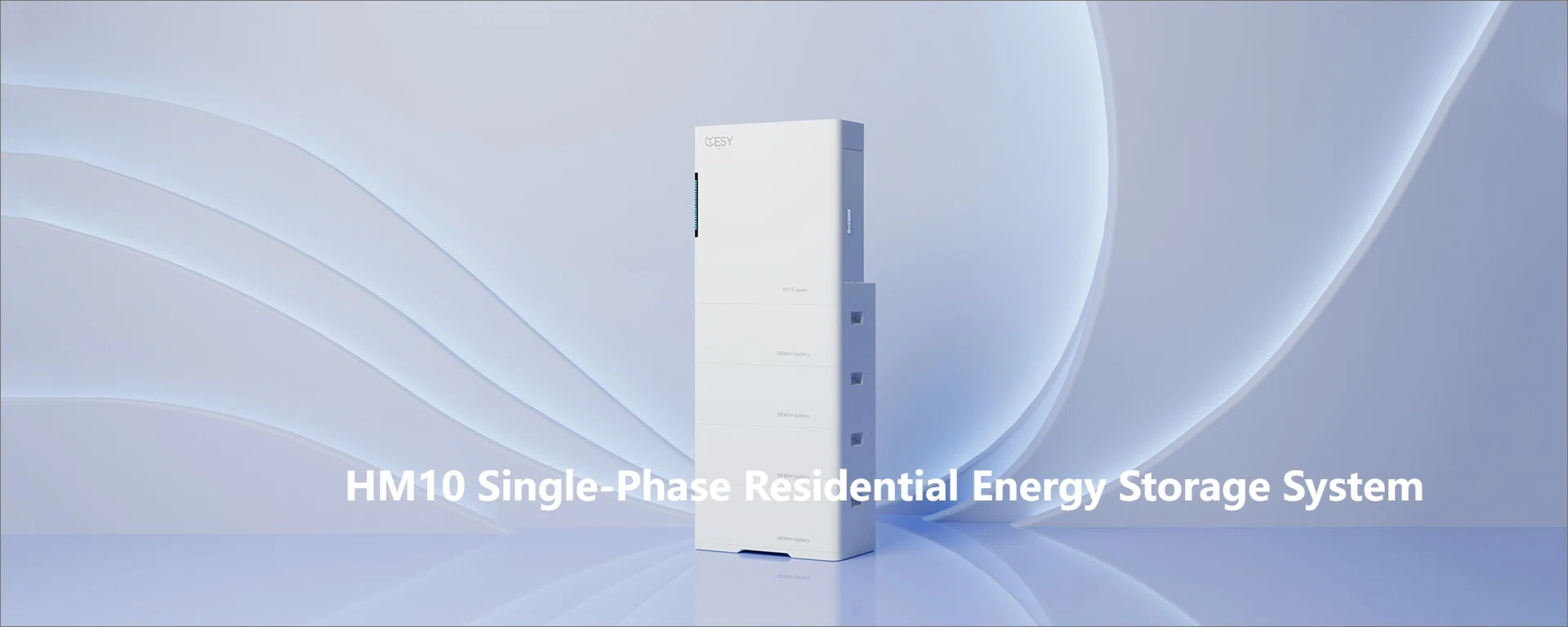
A 10kW single-phase home energy storage system is designed by matching inverter output, battery capacity, solar generation, and household electricity demand. A practical configuration usually includes a 10kW hybrid inverter, 20–40kWh LiFePO₄ battery storage, and 8–12kW solar panels. With inverter efficiency around 94–98% and battery depth of discharge near 90%, the system can provide stable daily energy management, reduce grid consumption, and support essential home loads during outages.
A 10kW residential energy storage system is suitable for homes with higher electricity consumption, especially properties using air conditioning, heat pumps, electric vehicles, and multiple household appliances. Compared with smaller 3–5kW systems, a 10kW inverter provides more output capacity for simultaneous loads.
A typical household electricity profile can include:
| Household Load | Average Power Range |
|---|---|
| Refrigerator | 100–300W |
| Lighting system | 200–800W |
| Air conditioning | 2–5kW |
| Heat pump | 1–4kW |
| EV charger | 3–7kW |
| Kitchen appliances | 1–3kW |
When several appliances operate together, the power demand can quickly exceed smaller inverter ratings. A 10kW single-phase inverter can supply approximately 43–45A at a 230V voltage system, making it suitable for many residential applications in North America, Europe, and other single-phase markets.
A residential system should not only match the maximum household load but also consider daily electricity patterns, seasonal changes, and future equipment additions.
The inverter selection determines how much power can flow between solar panels, batteries, the grid, and home appliances. A hybrid inverter is commonly selected because it combines solar conversion and battery management functions in one unit.
For a 10kW system, common inverter specifications include:
| Parameter | Typical Range |
|---|---|
| Rated AC output | 10kW |
| PV input capacity | 10–15kW |
| Efficiency | 94–98% |
| Battery voltage range | 100–500V depending on design |
| Operating temperature | -20°C to 50°C |
Many modern hybrid inverters allow PV oversizing. For example, a 10kW inverter may accept 12kW or more solar input, allowing the system to generate additional electricity during mornings, evenings, or lower sunlight periods.
The solar array size should match both household consumption and battery charging needs. A common design uses 8–12kW photovoltaic modules with a 10kW inverter.
A simple daily generation calculation:
-
Solar capacity: 10kW
-
Average sunlight: 5 peak sun hours/day
-
System efficiency: 80%
Estimated output:
10kW × 5 × 80% = 40kWh/day
In 2025, many residential solar installations are designed around higher self-consumption rather than exporting all electricity to the grid. A properly sized PV system can supply daytime loads while charging batteries for evening usage.
Battery sizing depends on how long the homeowner wants stored energy to support loads. The calculation should consider daily consumption, usable battery capacity, and conversion losses.
For example:
| Parameter | Example Value |
|---|---|
| Daily electricity use | 30kWh |
| Backup period | 1 day |
| Battery discharge depth | 90% |
| System efficiency | 90% |
Required battery capacity:
30kWh ÷ 0.9 ÷ 0.9 ≈ 37kWh
A 30–40kWh battery is therefore suitable for higher-consumption homes requiring longer backup periods.
Common battery configurations:
| Battery Capacity | Suitable Usage |
|---|---|
| 15–20kWh | Evening energy use |
| 25–30kWh | Average household backup |
| 35–40kWh | Large homes and extended backup |
Lithium iron phosphate batteries are widely used in residential storage because of their long cycle life and stable thermal characteristics. Many LiFePO₄ batteries can achieve more than 6,000 cycles while maintaining around 80% remaining capacity under suitable operating conditions.
The battery management system controls charging, discharging, temperature monitoring, and protection. A residential battery system should operate within manufacturer-defined voltage and temperature ranges to maintain long-term performance.
A 30kWh battery with 90% usable capacity provides about 27kWh of available energy before inverter losses are considered.
System architecture also affects installation quality. A typical 10kW single-phase setup includes:
-
Solar panels connected to MPPT inputs
-
Hybrid inverter connected to the battery pack
-
AC distribution panel connected to household circuits
-
Backup panel for selected essential loads
-
Monitoring platform for energy data
For homeowners using a modular battery design, expansion is easier because additional battery units can be added when electricity demand increases. Products such as ESYsunhome HM10 are designed for residential energy storage applications where battery capacity and system flexibility are important factors.
Backup planning requires separating essential and non-essential loads. A battery system can provide power during outages, but the available backup time depends on actual consumption.
Example:
| Average Load | 30kWh Battery Runtime |
|---|---|
| 1kW | About 27 hours |
| 3kW | About 9 hours |
| 5kW | About 5 hours |
| 8kW | About 3 hours |
Reducing unnecessary loads during outages can extend operating time. Many homeowners place refrigerators, lighting, communication devices, and security equipment on backup circuits while excluding large heating or cooling equipment.
Energy management software improves system operation by adjusting charging and discharging schedules. The controller can charge batteries when solar production is high and use stored energy when electricity prices increase.
A typical smart energy schedule:
| Time Period | System Operation |
|---|---|
| Morning | Solar powers household loads |
| Midday | Extra solar charges battery |
| Evening peak hours | Battery supplies household electricity |
| Night | Grid supports remaining demand if needed |
In regions using time-of-use electricity pricing, automated battery control can reduce peak electricity purchases. Some households achieve 50–80% reduction in grid consumption during high-price periods after installing appropriately sized storage systems.
Safety design must also be considered during installation. A 10kW system involves higher current levels than smaller residential units, requiring suitable protection components.
Important installation components include:
-
DC disconnect switches
-
AC circuit breakers
-
Surge protection devices
-
Grounding equipment
-
Temperature monitoring
-
Certified battery enclosures
Battery placement should follow local electrical standards. Indoor installations require suitable ventilation and temperature control, while outdoor systems need protection from moisture and extreme weather.
The economic performance of a 10kW energy storage system depends on electricity prices, solar production, battery size, and installation costs. A larger battery is not always necessary if household consumption is low.
A balanced design usually considers:
| Factor | Recommended Consideration |
|---|---|
| Daily consumption | 20–40kWh for many large homes |
| Solar size | 8–12kW |
| Battery size | 20–40kWh |
| Inverter rating | 10kW |
| Battery chemistry | LiFePO₄ |
Future expansion should also be included during the initial design stage. A modular system allows homeowners to begin with a smaller battery capacity and add storage later when electricity demand increases, such as after installing an electric vehicle charger or additional heating equipment.
A well-designed 10kW single-phase home energy storage system combines sufficient inverter output, properly sized battery storage, suitable solar capacity, and intelligent control. With correct component matching, the system can improve solar utilization, provide backup electricity, and support modern household energy needs.